 CephOrtho AI
Cephalometric tracing in seconds, checked by you.
CephOrtho AI places 29 landmarks on a lateral ceph, runs the analyses orthodontists use every day, and gives you a report split into skeletal, dental and soft-tissue findings. Every point stays editable.
Questions or early access: [email protected]
Assists the clinician. It does not diagnose: every landmark and result is reviewed and confirmed by you.
- Classic benchmark most published models train on19
- Many tools in use today21
- CephOrtho AI29
Newer research benchmarks go beyond 29 points. That is where CephOrtho AI is heading, version by version.
Powered by the D2R-Talab engine
Powered by D2R-Talab
Every result in CephOrtho AI comes from D2R-Talab, the AI engine designed and trained for this app, and still in training.
- Two-stage landmark detection: a first model finds all 29 points, a second zooms in on each one to refine it
- Trained to stay accurate across ages, from growing children to adults
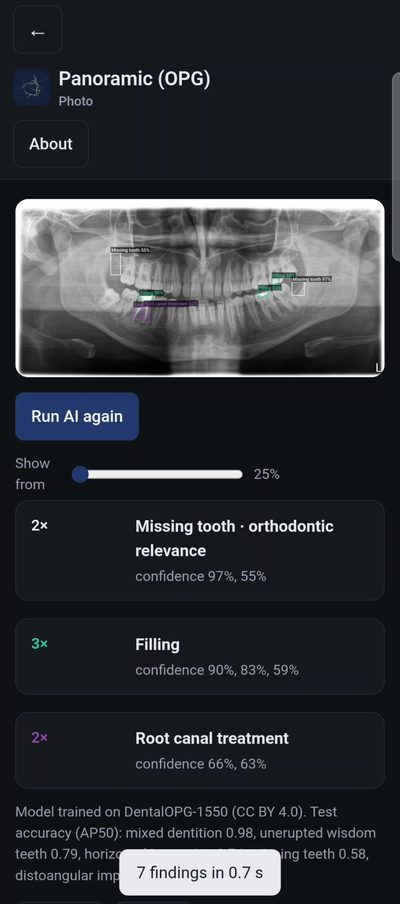
- Cervical vertebral maturation staging and dental age from panoramics
- Panoramic findings and tooth outlines, now in training
Trained on 8,076 licensed X-rays so far, and improving with every version.
Where the name comes from
D2R stands for From Diagnosis to Retention, the orthodontic book by the engine's author. Talab is the family name of the researcher who designed and trained it, Dr. Abdulellah Talab.
From zero to now
How many X-rays the AI has learned from, and how its accuracy improved, version by version. Every number comes from the development record.
8,076X-ray images used to train and test the AI
- Lateral cephalograms2,017
- Panoramic radiographs6,059
Mean landmark error (mm), lower is better
Tested on 150 cephs the AI never saw. The first point used a different public test set and 19 landmarks, so it shows the starting level, not an exact comparison.
Show as table
| Model version | Mean error | Within 2 mm |
|---|---|---|
| v1 · First model (ISBI, 19 landmarks) | about 2.9 mm | – |
| v2 · Retrained on Aariz, 29 landmarks | 1.392 mm | 79.9% |
| v3 · Self-training | 1.384 mm | 80.1% |
| v4 · Two-stage refine v1 | 1.164 mm | 85.6% |
| v5 · Refine v2 | 1.152 mm | – |
| v6 · Refine v3 | 1.136 mm | 86.3% |
| v7 · Refine v4 | 1.123 mm | 86.4% |
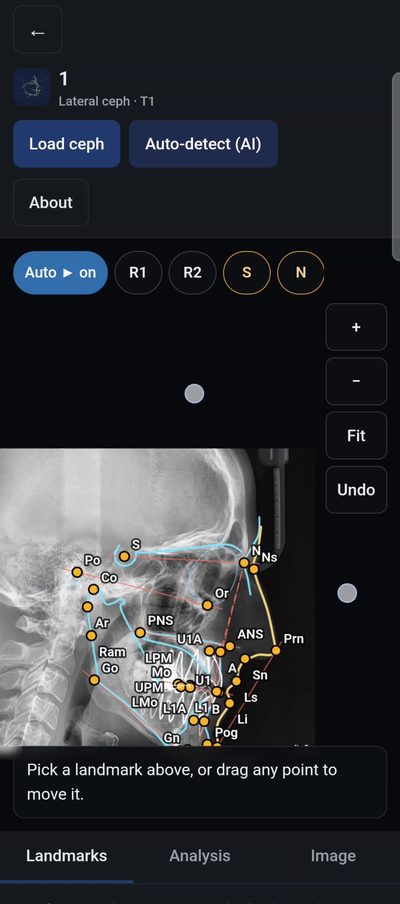
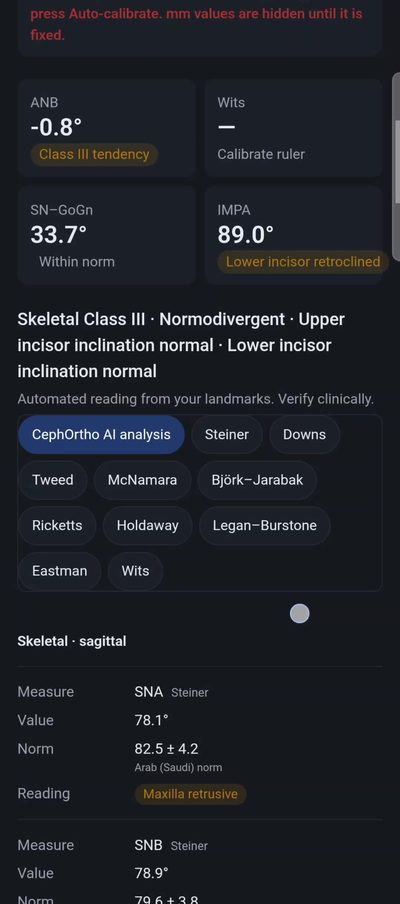
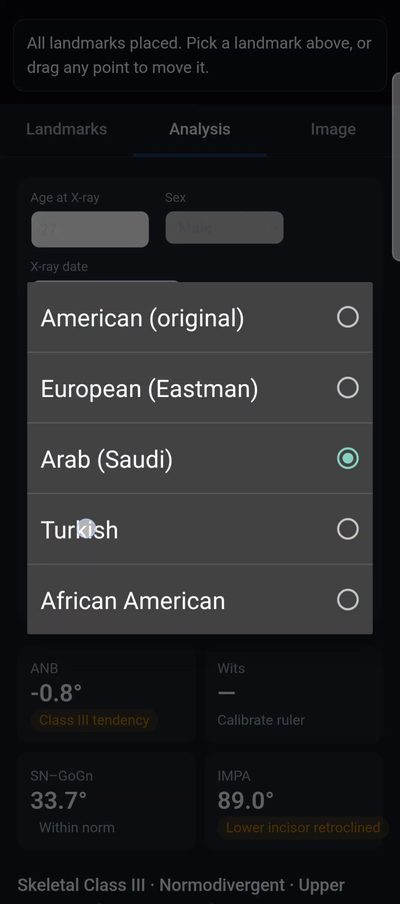
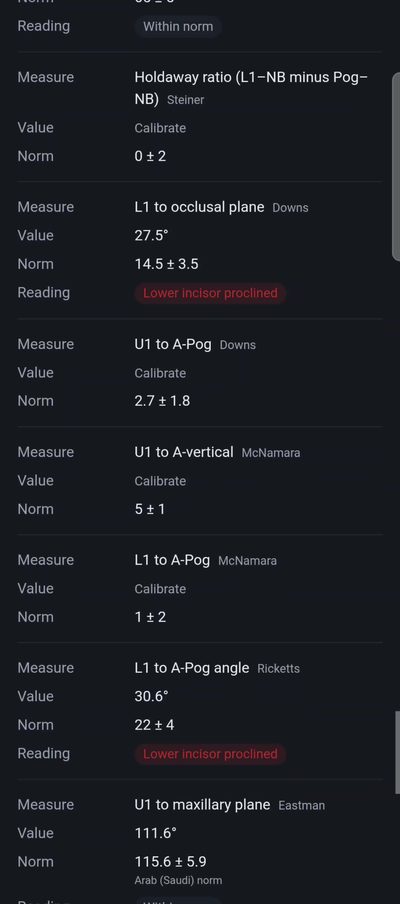
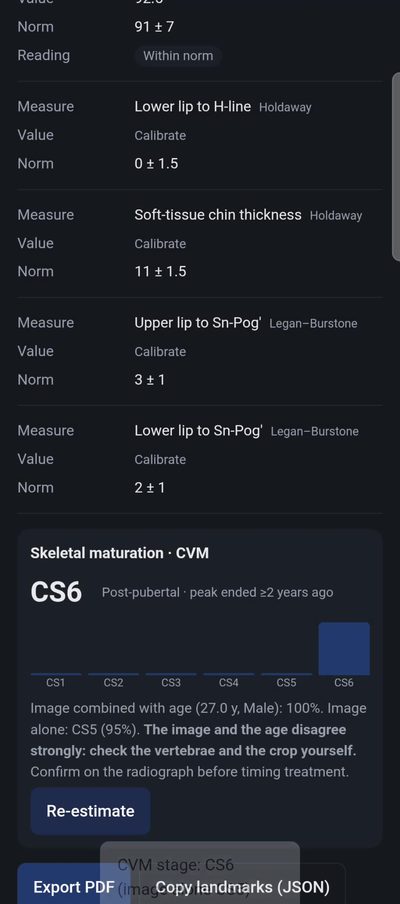
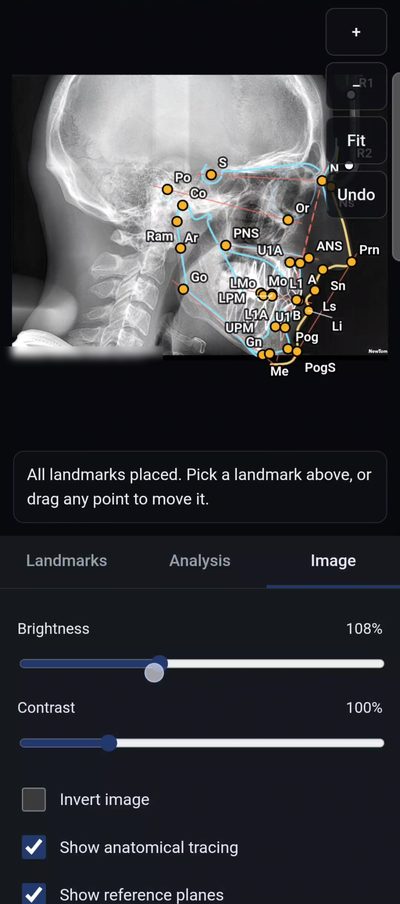
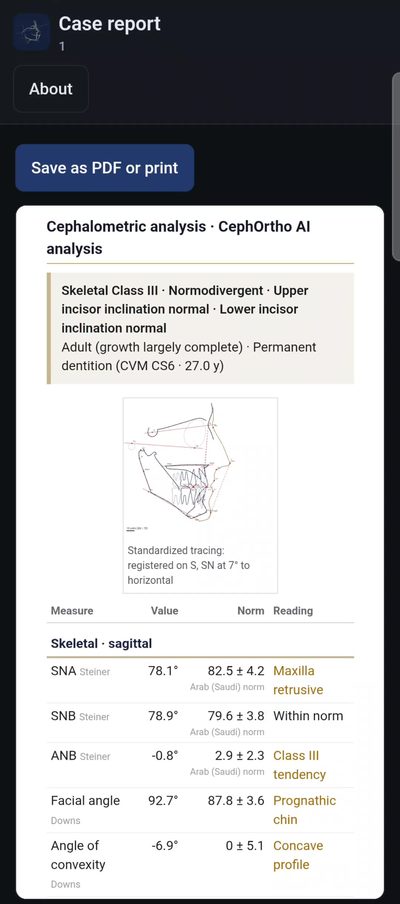
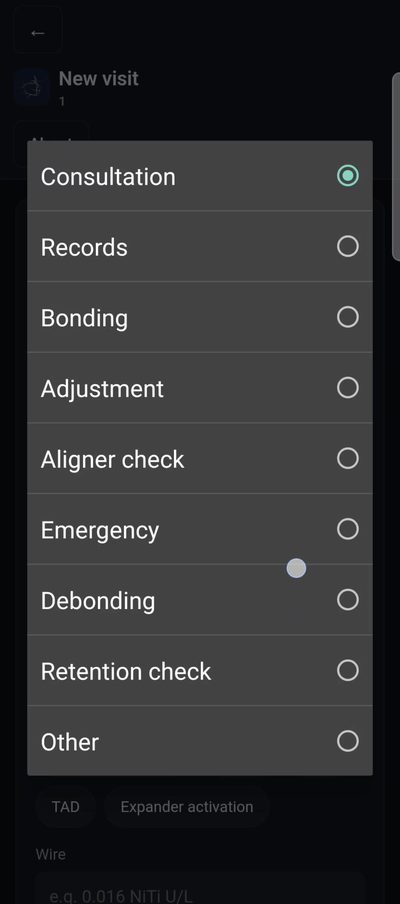
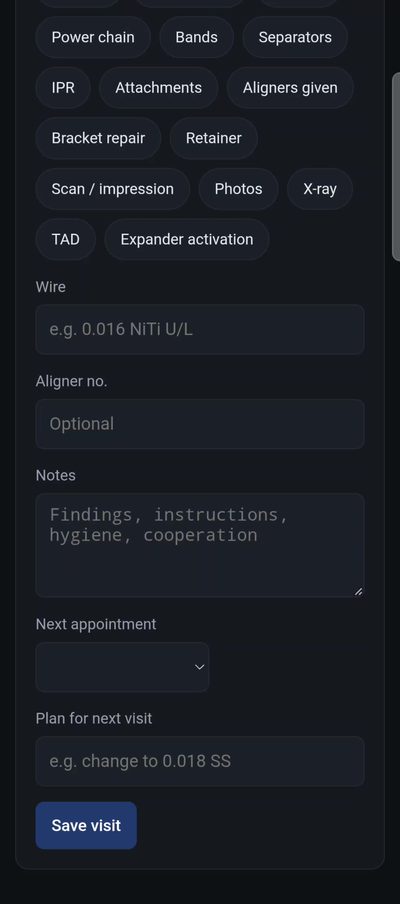
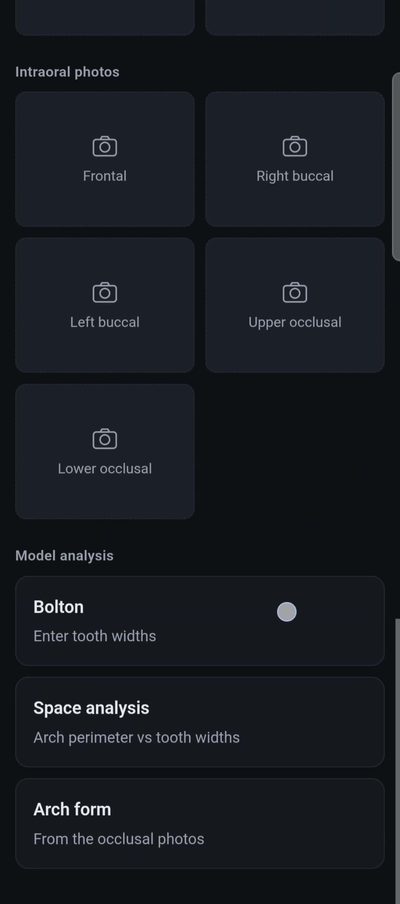
Real screens from CephOrtho AI
Taken from the app. Patient details have been removed.
What it does today
Built by a dentist working in orthodontics who had to trace cephs by hand and couldn't get access to professional software as an individual.
Automatic landmarks
29 cephalometric landmarks found by AI in two stages, then refined. Drag any point to correct it.
Choose your analyses
Steiner, Tweed, Downs, Jarabak, McNamara, Wits and E-line, or one all-inclusive CephOrtho AI analysis.
Age-aware norms
Results compared with norms for the patient's age and the population you pick, with growing and adult patients handled separately.
CVM and growth status
Cervical vertebral maturation staging, cross-checked against age and dental age before a growth phase is shown.
Automatic ruler calibration
The ceph ruler is found and measured for you. If it can't be found, tap it once.
PDF reports
Smooth anatomical tracing and results in three sections, exported as a PDF you can keep in the patient file.
Every visit in one place
Each patient has one file: visits, appointments, procedures, and the ceph analysis for that visit. Short keywords fill common entries in a tap, so a visit note takes seconds, not minutes.
- Visit history with date, procedure and notes
- Appointments for the next visit
- Short keywords for common procedures
- Ceph, analysis and PDF report linked to each visit
Help this grow faster
CephOrtho AI is built by one clinician with no institution behind it. These four things would move it forward the most.
- 1
Clinical ceph data
Anonymised lateral cephs from clinics and universities, shared under a proper agreement, to train and validate on local machines.
- 2
Clinicians to test it
Orthodontists and dentists who use it on real cases and report what is wrong. Every correction makes the next version better.
- 3
Server credits or funding
A secure online version needs servers. Cloud credits or a small grant would cover it.
- 4
An institutional partner
Many datasets and grants require a registered institution. A partner centre would open those doors.
The app is coming soon
CephOrtho AI for Android tablets and phones is launching soon and will be free at launch. Write to me with your name, specialty and country to join the early-access list. You will be among the first to get it, and your feedback will shape what gets built next.